5.0 on Amazon
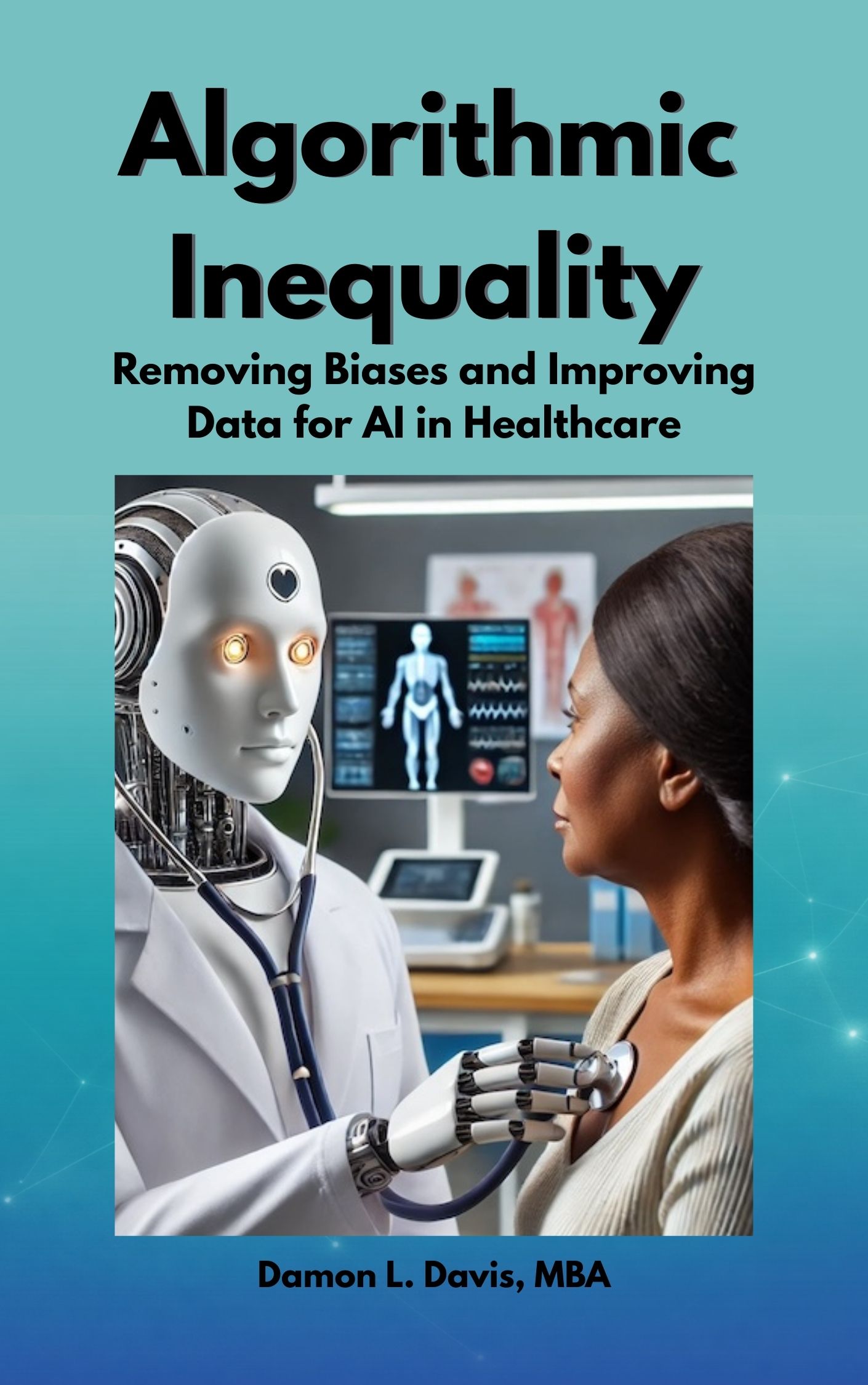
Algorithmic Inequality
Removing Biases and Improving Data for AI in Healthcare
by Damon L. Davis, MBA
AI promises to transform patient care. This book asks the harder question: transform it for whom? A comprehensive look at how AI can be both a powerful ally and a genuine threat to health equity, and what it actually takes to get this right.
Published August 2024 • Available on Kindle
AI is not neutral. This book proves it.
The Promise
AI can analyze genetic and medical data at a scale and speed no human can match. It surfaces patterns that would otherwise stay hidden. Applied carefully, it has real potential to personalize medicine and improve outcomes for everyone.
The Risk
Without careful design, AI amplifies the biases already baked into healthcare data. That leads to unequal care and worse outcomes for communities that have historically been underserved by the systems that trained the AI in the first place.
The Path Forward
Representative datasets. Community involvement in AI development. Policy frameworks with actual teeth. This book makes the case for what trustworthy healthcare AI requires, and calls for collective action to get there.
For everyone who has a stake in how AI shapes healthcare
This is not a technical manual. It's a book for decision-makers: the people who choose what AI gets built, how it gets deployed, and who it's supposed to serve.
Healthcare professionals
Navigating AI adoption decisions and wanting to understand what they're actually agreeing to deploy.
Policymakers
Writing the rules around AI in care delivery and needing grounded context, not vendor marketing.
AI developers
Building systems that affect health outcomes and ready to reckon with what that responsibility actually means.
Patients, caregivers, and advocates
Who want to understand what's happening to their data and their care, and what to demand from the systems that use it.
Damon L. Davis, MBA
Damon L. Davis has spent 20 years studying why organizations underperform without strong data and business intelligence. He built Adaptive Intel to close the gap between AI's potential and the reality most businesses face when they try to use it.
Algorithmic Inequality applies that same lens to healthcare, one of the highest-stakes environments for AI bias. The book draws on Damon's background in applied AI strategy to examine a question most industry conversations avoid: who benefits, and who gets left behind?
He is also the author of Using AI for Accelerated Insights and the creator of the ADAPT Framework for AI adoption.
Tools that go with the book
Two free resources directly relevant to what this book covers. Both are free.
Bias Monitoring Framework
Four checks that catch AI bias before it causes damage. Validate before you adopt, test during the pilot, audit outputs quarterly, and keep a human as the final checkpoint. No data science team required.
AI Regulatory Reference
Every federal body, key framework, and state law in plain language — including NIST, FTC, Colorado SB 205, Texas TRAIGA, and the EU AI Act. What each one means for a business your size, updated semi-annually.
This book raised questions. Let's work through yours.
If Algorithmic Inequality surfaced questions about AI governance, bias monitoring, or readiness in your own organization, that's exactly what Adaptive Intel helps businesses work through. Start with a strategy call. No prep, no deck.